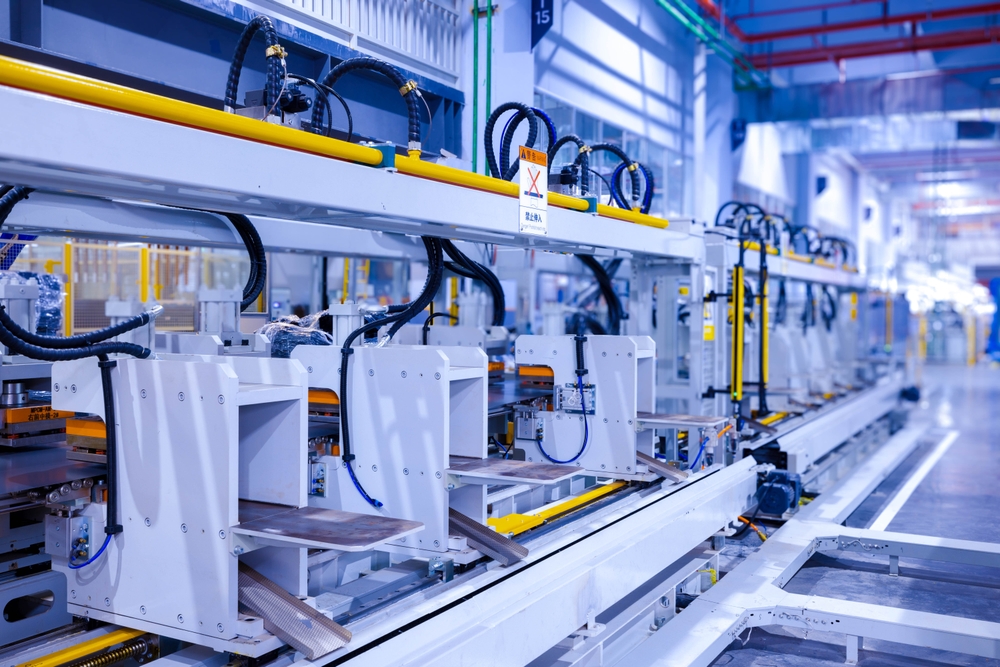
Home appliance manufacturing sits at the intersection of demanding production targets, changing consumer expectations, tight margins, and growing pressure to improve sustainability. Manufacturers need to produce reliably at scale while remaining flexible enough to respond to new product designs, shorter lifecycles, and shifting demand. That makes innovation on the factory floor more than a matter of adding new equipment. It is about creating a production environment where tools, data, people, and processes work together more effectively.
Smarter production starts with the right manufacturing strategy
For manufacturers looking to modernize their operations, the first step is often to understand where the greatest opportunities actually are. New technology can bring major benefits, but only when it solves a real production challenge. That might mean improving fastening accuracy, reducing rework, creating more consistent quality control, or making the line easier to adapt when a new product variant is introduced.
There is no shortage of technical advice available, and you can find good information online about solutions developed specifically for home appliance manufacturing. Looking at how established industrial technology providers approach the sector can help manufacturers identify where automation, connected tools, process control, and data collection may offer practical value.
A modern home appliance factory rarely depends on one isolated technology. Production is usually built around a sequence of tightly connected operations, each of which can affect the quality of the finished product. Assembly tools need to deliver repeatable results, operators need clear guidance, quality data has to be available when needed, and equipment must support the required production pace.
This is why smarter manufacturing is increasingly based on integration. A connected production environment can provide greater visibility into what is happening on the line, allowing teams to identify deviations earlier and respond before small problems become expensive ones. When data from tools and production systems is collected consistently, it can also support longer-term improvements in efficiency and process design.
The objective is not to automate every task simply because the technology exists. The better approach is to determine which operations benefit most from automation and which still rely on human flexibility, judgement, or dexterity. In many factories, the strongest solution is a combination of both.
Flexibility is becoming essential in appliance assembly
Home appliance production has traditionally benefited from high volumes and repeatable processes. That remains important, but manufacturers also need to deal with growing product variation. A refrigerator, washing machine, heat pump, or kitchen appliance may be offered in several configurations, with different features, components, and market-specific requirements.
That variation places pressure on the assembly line. A process that works efficiently for one product version may become less effective when operators have to switch frequently between models. Changeovers can create delays, increase the risk of mistakes, and complicate quality assurance.
Flexible production systems are therefore becoming increasingly valuable. Programmable tools, digital work instructions, intelligent controllers, and connected software can help manufacturers manage different assembly requirements without rebuilding the entire production process for every new model.
For example, tightening parameters can be linked to a specific product or assembly stage. When the correct settings are automatically assigned, there is less reliance on manual adjustment. This can help reduce the risk of incorrect torque values or missed fastening steps while making it easier to introduce new variants.
Flexibility also matters when production volumes change. Demand for home appliances can be difficult to predict, particularly when economic conditions, energy prices, housing markets, or consumer preferences shift quickly. A production system that can be adjusted without extensive downtime gives manufacturers more room to respond.
The same principle applies to product development. Shorter product lifecycles mean factories may need to accommodate new designs more frequently than before. Equipment that can be reconfigured, updated, or integrated with new processes can therefore provide greater long-term value than highly rigid systems designed around a single product.
Automation can improve consistency without removing human expertise
Automation is often discussed as if its only purpose were to replace manual work. In home appliance manufacturing, its real value is usually broader. Automation can take over repetitive, physically demanding, or highly standardized tasks while helping operators focus on work where human flexibility remains important.
A good example is automated fastening. Screws and other fasteners are used extensively in many appliances, and the assembly process can involve hundreds of repeated actions across a production shift. Automatic screw feeding and controlled tightening can reduce unnecessary movement while helping maintain a more consistent process.
Robotic tightening cells can also be useful where production requires high repeatability or where access is difficult for an operator. However, automation needs to be designed around the actual product, takt time, available space, and required quality level. A technically advanced solution that slows the line or creates maintenance complexity can easily become counterproductive.
This is why process analysis should come before technology selection. Manufacturers need to understand cycle times, bottlenecks, quality issues, ergonomic risks, and the level of variation in each assembly stage. Once those factors are clear, it becomes easier to decide where automation is justified.
Automation can also support traceability. When production tools are connected to software, it is possible to record process data and associate it with individual products or production batches. This provides a clearer history of how an appliance was assembled and can be valuable when investigating quality issues.
In practical terms, the goal is to make the process more predictable. When critical assembly steps are controlled and verified, manufacturers can reduce their dependence on end-of-line inspection alone. Quality becomes part of the process rather than something checked only after the product has been completed.
Data and process control support better manufacturing decisions
Connected manufacturing generates large amounts of data, but data by itself does not improve production. The real value comes from turning information into decisions that can be acted on.
A tightening system, for example, can provide information about whether a fastening operation was completed within the specified parameters. Over time, that data can reveal recurring deviations, changes in process capability, or differences between stations. This gives production teams a stronger basis for identifying root causes.
The same approach can be applied across a broader manufacturing environment. If data from tools, equipment, and quality systems is connected, manufacturers can gain a more complete picture of production performance. Trends that would otherwise be difficult to detect may become visible much earlier.
Process control can also help prevent mistakes before they occur. Error-proofing systems can guide operators through the correct sequence, confirm that the right tool is being used, or prevent the process from moving forward if a required step has not been completed.
This is particularly useful in mixed-model production, where different products may pass through the same workstation. Instead of relying entirely on the operator to remember every variation, the system can present the correct instructions and settings for the specific product.
Better data can also support maintenance. If equipment performance changes gradually, connected systems may reveal warning signs before a failure causes unplanned downtime. The exact approach depends on the equipment and available data, but the principle is simple: better visibility makes it easier to move from reactive problem-solving toward more proactive production management.
For management teams, this also improves the quality of investment decisions. Rather than relying only on broad assumptions, manufacturers can use real production data to determine where a bottleneck exists, how often a defect occurs, or whether a process change has actually improved performance.
Innovation should improve efficiency, quality, and sustainability together
Manufacturing innovation is most valuable when it produces several benefits at the same time. A solution that improves cycle time but increases waste or makes the operator’s job more difficult may simply move the problem elsewhere.
Home appliance manufacturers therefore need to evaluate improvements from a wider perspective. Productivity matters, but so do quality, ergonomics, energy use, material consumption, maintenance requirements, and the ability to adapt in the future.
Reducing rework is one example of an improvement that can influence several areas at once. A more controlled assembly process can lower the number of defective products, reduce wasted materials, save production time, and decrease the energy used to correct mistakes. Better first-time quality is therefore both an operational and a sustainability issue.
Ergonomics is another important part of the equation. Repetitive fastening, awkward working positions, heavy tools, and unnecessary reaching can place physical strain on operators. Tool selection, workstation design, torque reaction systems, and automation can all contribute to creating a more manageable working environment.
Sustainability is also becoming more closely connected to manufacturing efficiency. Using materials more effectively, reducing scrap, minimizing rework, and avoiding unnecessary energy consumption can support environmental objectives while also lowering operating costs.
The challenge is to avoid treating sustainability, productivity, and quality as separate projects. In a well-designed manufacturing system, these areas often reinforce one another. Better process control can reduce defects. Reduced defects can lower material waste. Improved ergonomics can support more stable production. Flexible equipment can extend the useful life of an investment by making it easier to adapt to new products.
For home appliance manufacturers, the most effective route forward is therefore not innovation for its own sake. It is a structured effort to identify weak points in production and apply the right combination of tools, automation, software, and process knowledge.
A production line review can be a useful starting point. By examining how work is actually performed, manufacturers can identify unnecessary movement, inconsistent operations, quality risks, and opportunities to automate or connect specific processes. Even relatively small changes can create meaningful improvements when they address a recurring problem.
As home appliances continue to evolve, manufacturing needs to evolve with them. Factories that can combine precision with flexibility will be better positioned to manage new product requirements and changing market conditions. The technology already exists to make many production processes more connected, controlled, and adaptable. The key is choosing solutions that fit the real needs of the line and contribute to measurable improvements in everyday manufacturing.